
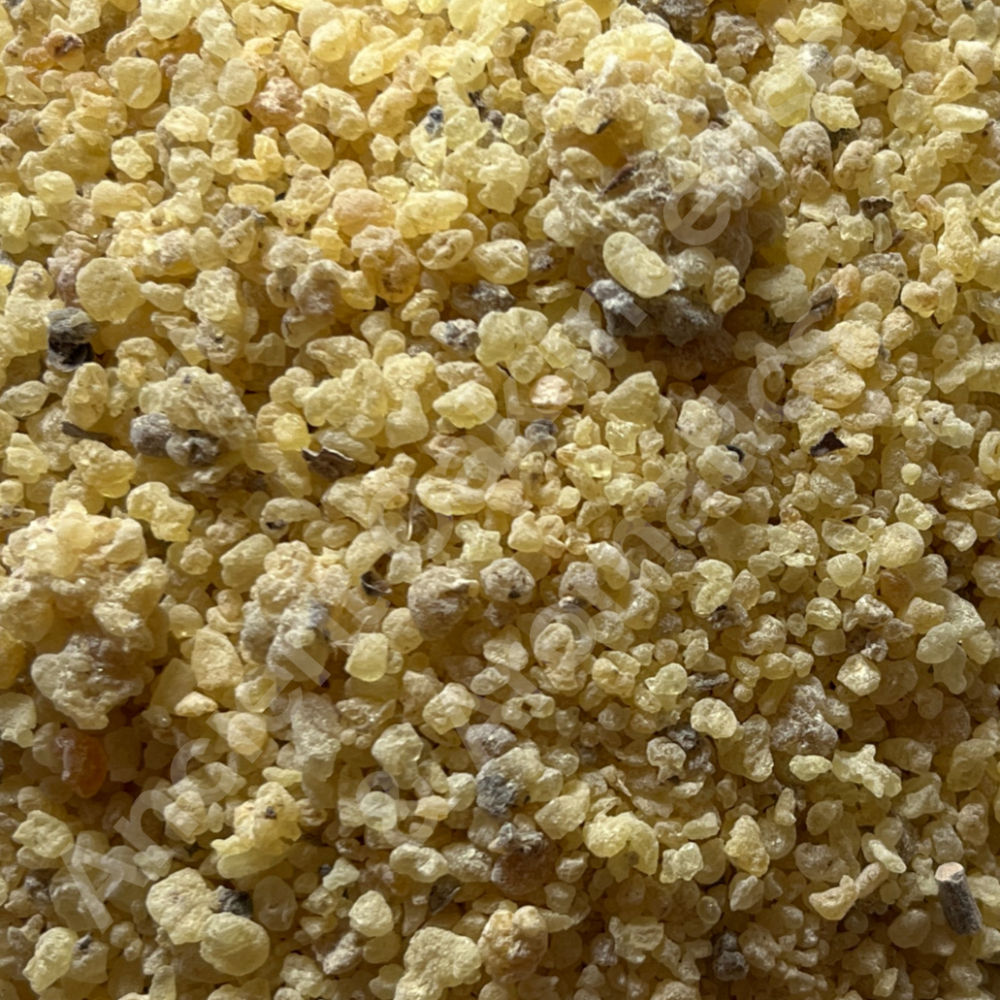
Persian Mastic Resin - Pistacia terebinthus - Iran
Persian Mastic Resin - Pistacia terebinthus - Iran
Persian mastic resin from Pistacia terebinthus, often called “wild mastic,” “Persian turpentine,” or “bān resin” is an aromatic, pale‑gold resin traditionally harvested in western and northern Iran. It has been valued for ritual fumigation, perfumery, traditional medicine, and craftwork. Its scent is green, pine‑bright, slightly fruity, and faintly smoky, with a sharper edge than the Mediterranean Pistacia lentiscus mastic.
Characteristics
Starts as a sticky, honey‑soft exudate that hardens into translucent tears. Color ranges from pale straw to amber‑gold, chewy when warmed, brittle when cold.
Scents: Light citrus, fresh pine aroma with a clean, bright flame and produces a thin, aromatic smoke when burned.
Historically
Native to Iran and the eastern Mediterranean region. Pistacia terebinthus thrives in: Zagros and Alborz mountain foothillsRocky, calcareous soils, hot, dry summers and cold winters. These conditions create a resin that is more intense and sharper than coastal mastics.
Used in ancient times for aromatic, medicinal, and preservation purposes.
Resin from related trees was even used in early wine preservation and traditional remedies.
Traditional Uses
In Iranian folk tradition, mastic resin was burned: to cleanse indoor air, mark thresholds during ceremonies, and to create a protective atmosphere during seasonal transitions. Its crisp, pine‑bright smoke was believed to dispel stagnation and sharpen mental clarity.
Persian physicians and herbalists historically used the resin: as a chewing resin for fresh breath and oral health. Used in digestive preparations. Used as a warming agent in salves and poultices.
Its natural antimicrobial qualities made it a valued household remedy. Before the widespread use of imported incense materials, Persian mastic was a local aromatic used in: Perfumed oils. Incense mixtures for homes and bathhouses.
Scented pastes applied to textiles or personal items, its scent acted as a bridge between pine resins and fruitier aromatics, giving blends a fresh, uplifting top note.
The resin’s adhesive and protective qualities made it useful in: varnishes for wood and metal, acts as binding agents in pigments, water‑resistant coatings for small tools or containers. Its clarity and hardness made it especially valued in fine craftwork.
While less common than Mediterranean mastic, Persian mastic was sometimes: chewed for oral hygiene, added in tiny amounts to sweets or syrups for a resinous, pine‑like lift. This practice was more regional and seasonal than widespread.
Incense: fresh, cleansing, and clarifying atmosphere.
Traditional use: perfumery, herbal, and practical applications.
DISCLAIMER
Our expertise is in incense crafting and fragrance. The information provided here is intended for your enjoyment and educational insight into the historical uses and origins of these products. We do not offer medical advice or recipes, as we are not healthcare professionals. Before consuming anything not specifically sold as food, we strongly recommend consulting a licensed healthcare provider.
Color may vary due to monitor differences, lighting conditions, or individual perception.