
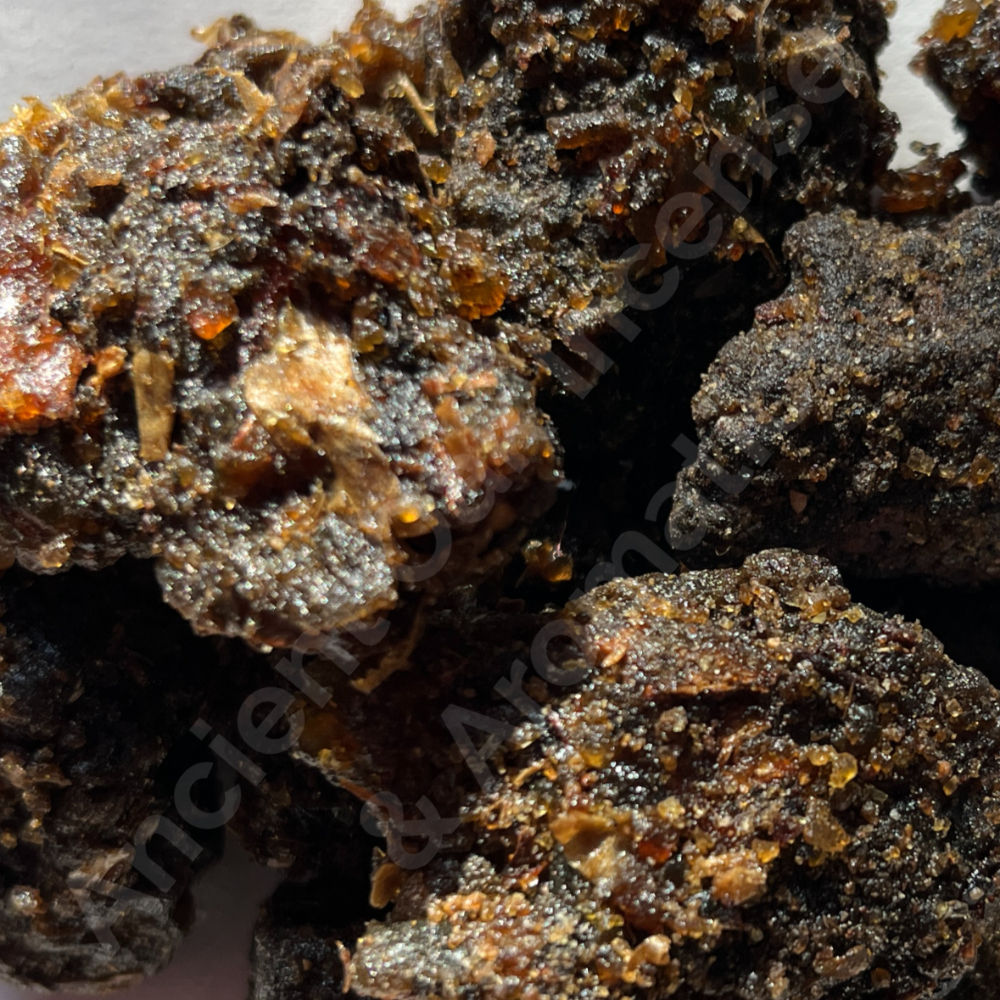
Myrrh Resin - Commiphora Wightii - Guggul - Nepal
Myrrh Resin - Guggul - Nepal
Myrrh resin from Commiphora wightii; known as guggul, has a long history of medicinal, aromatic, and ritual use, especially in South Asian traditions, and is one of the most culturally significant resins in Ayurveda.
Characteristics
Dark brown to black resin pieces, sometimes with amber or greenish tones, sticky when fresh and brittle when dried.
Scents: Warm, balsamic, slightly sweet, similar to myrrh but with a denser, smoky undertone.
Highly valued as a fixative in incense and perfumery.
Contains guggulsterones, phytosteroids responsible for many of its medicinal effects. Over 100 metabolites identified in leaves, stems, latex, and fruit.
Historically
Commiphora wightii is a resin‑producing shrub native to India, Pakistan, and arid Himalayan foothills, including parts of Nepal. It produces a fragrant oleo‑gum resin called guggul, historically identified with bdellium, a resin referenced in Hebrew, Greek, and Latin sources.
The plant is critically endangered due to overharvesting and slow regeneration, making its resin increasingly rare.
Traditional Uses
Guggul has been a cornerstone of Ayurveda for over 3,000 years, appearing in classical texts such as the Atharva Veda and Sushruta Samhita.
Traditional uses include: Metabolic disorders: obesity, lipid imbalance, sluggish metabolism. Joint and inflammatory conditions: arthritis, swelling, chronic pain. Skin and wound care: antimicrobial cleansing and healing support. Circulatory and cardiovascular health: improving blood flow and reducing “ama” (toxic buildup). These uses stem from the resin’s guggulsterones, bioactive compounds with anti‑inflammatory, antioxidant, and hypolipidemic effects.
Historically, guggul resin was burned as incense (dhoop) in temples and homes, producing a dense, fragrant smoke. It was also shaped into incense sticks and cones. Its aroma resembles myrrh and opoponax, linking it to ancient aromatic traditions.
Because guggul’s fragrance closely matches ancient bdellium, it was historically traded across the Middle East and South Asia for perfume, incense, and ritual offerings.
DISCLAIMER
Our expertise is in incense crafting and fragrance. The information provided here is intended for your enjoyment and educational insight into the historical uses and origins of these products. We do not offer medical advice or recipes, as we are not healthcare professionals. Before consuming anything not specifically sold as food, we strongly recommend consulting a licensed healthcare provider.
Color may vary due to monitor differences, lighting conditions, or individual perception.