
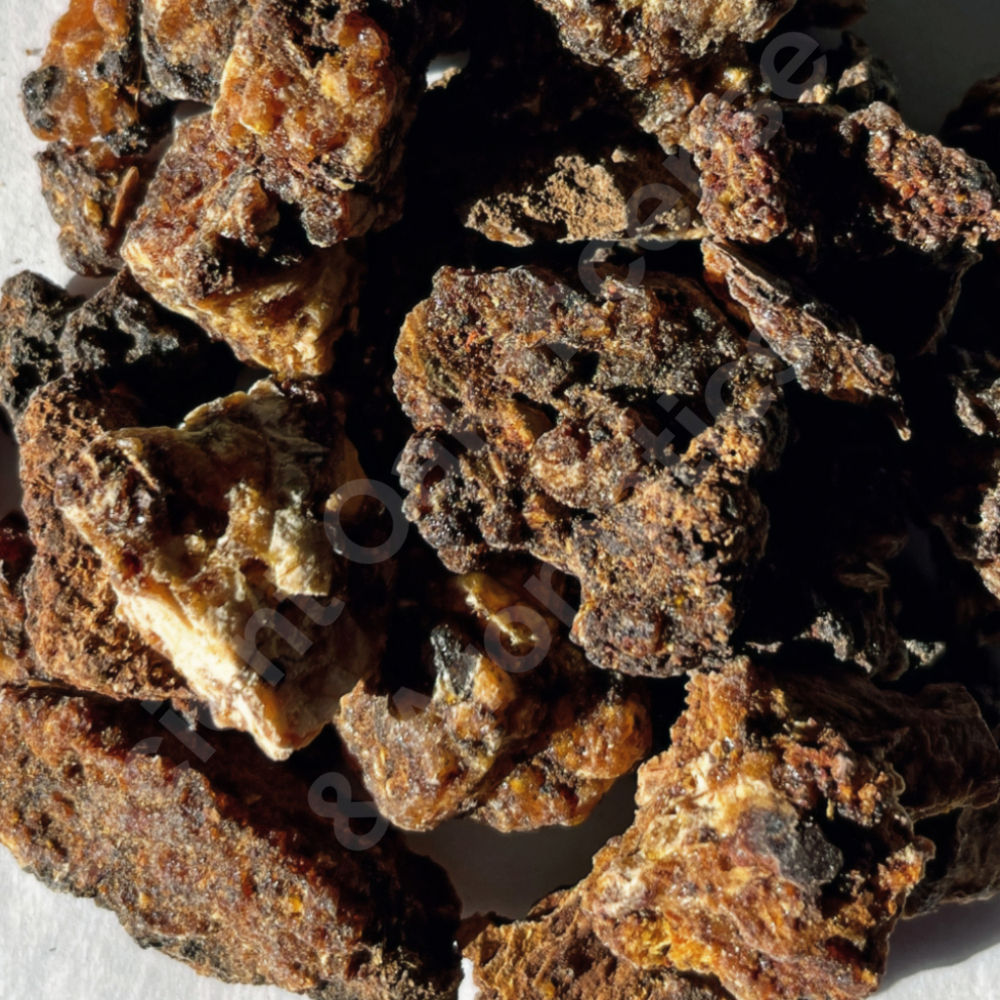
Myrrh Resin - Commiphora Guidotti - Opoponax Hadi - Ogaden
Commiphora Guidotti - Opoponax Hadi - Ogaden
Myrrh resin from Commiphora guidottii; known as Opoponax Hadi or “sweet myrrh” has historically been one of Somalia’s most important aromatic exports, valued for its warm scent, ritual significance, and use in perfumery. Deep cultural lineage as a Somali export. High aromatic strength and long‑lasting resin quality. Critical role in perfumery, where it is considered the definitive “sweet myrrh.”
Characteristics
Resin tears range from golden to deep orange‑brown, often more orange than typical myrrh, and semi‑translucent with a glossy surface when fresh.
Scents: Sweet, warm, honey‑balsamic, less bitter than myrrh.
Considered one of the strongest‑scented bdelliums, surpassed only by the resin of C. holtziana in intensity. Produces a resinoid via solvent extraction and an essential oil via steam distillation, both used in oriental‑style perfumes.
Known for its fixative qualities, helping anchor other aromatic notes.
Historically
Historically, it has often been confused with other Commiphora species due to similar scent profiles, but botanical studies confirm C. guidottii as the true source of perfumery opoponax.
Opoponax from C. guidottii has long been prized for its sweet, balsamic, warm aroma, making it a key ingredient in traditional incense blends and later in modern perfumery. It is used in iconic perfumes such as Shalimar, Coco Mademoiselle, and Poison, where it provides depth and resinous sweetness.
Somalia has exported opoponax since ancient times, alongside frankincense and myrrh. It was transported through Arabian ports such as Aden and traded into India and China. Its long‑standing commercial value contributed to Somalia’s reputation as a center of aromatic resins.
Traditional Uses
Topical preparations for skin appearance (inferred from its similarity to myrrh resins).
Aromatic fumigation for cleansing spaces.
Digestive and congestion support, as noted in regional herbal traditions.
DISCLAIMER
Our expertise is in incense crafting and fragrance. The information provided here is intended for your enjoyment and educational insight into the historical uses and origins of these products. We do not offer medical advice or recipes, as we are not healthcare professionals. Before consuming anything not specifically sold as food, we strongly recommend consulting a licensed healthcare provider.
Color may vary due to monitor differences, lighting conditions, or individual perception.