
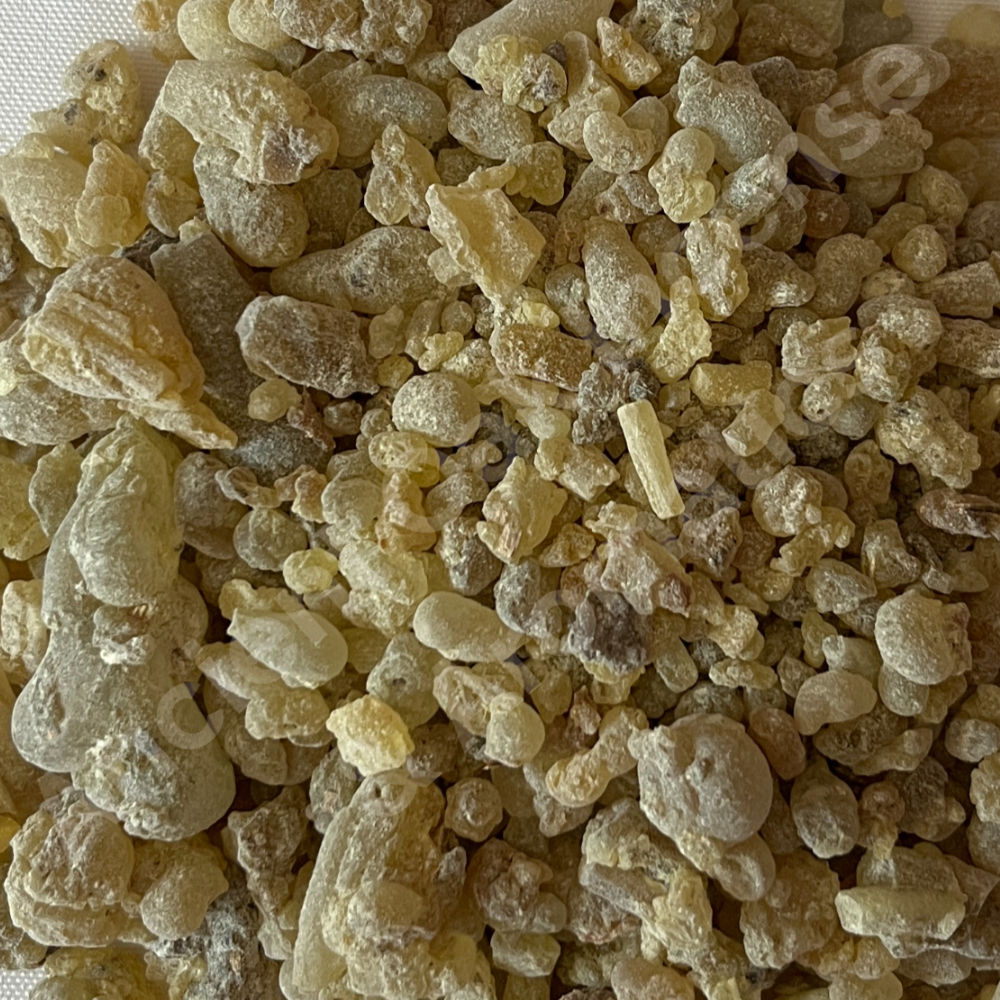
Frankincense Resin - Boswellia Serrata - Shallaki - India
Boswellia Serrata - Shallaki - India
Frankincense resin from Boswellia serrata; known as Shallaki in Ayurveda is one of India’s oldest medicinal resins, historically used for inflammation, ritual incense, and a wide range of therapeutic applications.
Characteristics
Pale to amber‑colored tears. Hard, brittle resin that becomes aromatic when heated. Collected in bamboo baskets to remove excess oil and solidify properly.
Scents: warm, resinous, slightly citrus‑woody.
The oleogum resin contains: 30–60% resin. 5–10% essential oils. Polysaccharides.
Major pentacyclic triterpenic acids (boswellic acids) responsible for anti‑inflammatory activity. Documented properties include: Analgesic, anti‑inflammatory, antibacterial, antioxidant. Anti‑diabetic, hepatoprotective, nephroprotective, anti‑cancer (traditional + modern review).
Historically
Represents India’s primary frankincense tradition, distinct from Arabian and African species
Boswellia serrata is the Indian frankincense tree, native to India and the Punjab region extending into Pakistan . It grows in dry mountainous regions such as the Deccan Plateau, Aravalli range, and Vindhya hills, where it produces pale, aromatic oleogum resin when the bark is incised .
The resin hardens into amber‑colored tears, which are then graded by flavor, color, shape, and size after processing .
Shallaki is described in foundational Ayurvedic texts such as the Charaka Samhita and Sushruta Samhita, where it holds “singular therapeutic importance” in India’s medical tradition . Ancient physicians documented not only its effects but also its ecology seasonal resin quality, habitat, and harvesting conditions.
One of the oldest documented medicinal resins in human history. Central to Ayurvedic pharmacology for over 3,000 years. Contains unique boswellic acids with clinically studied anti‑inflammatory effects. Used in ritual incense, medicine, and perfumery across ancient civilizations.
Traditional Uses
Historically, B. serrata resin has been used for: Inflammation & joint pain (supported by boswellic acids). Cough, diarrhea, dysentery, stomach pain, edema, toothache, headache in Indian folk medicine. Wound care, oral health, and digestive support in broader ancient traditions (Hindu, Babylonian, Persian, Roman, Chinese, Greek).
Modern research confirms that boswellic acids; especially acetyl‑11‑keto‑β‑boswellic acid are potent anti‑inflammatory agents that inhibit 5‑lipoxygenase .
Like other frankincense species, Shallaki resin has been used as incense in religious ceremonies and as a fragrance in daily rituals for millennia .
DISCLAIMER
Our expertise is in incense crafting and fragrance. The information provided here is intended for your enjoyment and educational insight into the historical uses and origins of these products. We do not offer medical advice or recipes, as we are not healthcare professionals. Before consuming anything not specifically sold as food, we strongly recommend consulting a licensed healthcare provider.
Color may vary due to monitor differences, lighting conditions, or individual perception.